About the author
I’m Joyce, and I write specs.
Specimen record
- Name
- Joyce Akiko
- Habitat
- northeastern Pennsylvania
- AI tools
- dozens, always changing
- Known weakness
- ice cream, when bored

Heada systems thinker
Hearta love of processes
Hands, just out of framebusy in Builder mode
I write specs for the AI tools I use every day. For the systems I build around those tools. And lately, for myself. This site is where those specs go public, along with the useful, strange, sometimes maddening parts of working with AI.
My background
Operations
10+
years in product, projects and business operations
Project management
98%+
of client projects on time and on budget. I researched and chose the project management system, configured and deployed it, then ran it as the project manager for the entire team.
My specialties with AI
13
found in my own session transcripts. The top one: verification and proof.
AI, systems and tools
With AI
~4
years working with AI, and dozens of AI tools along the way, from ChatGPT to the AI built into everyday apps
My vault
22,624
notes, October 2026
My rulebook
v57
the version of the rules every Claude session reads first, October 2026
Where I come from
I’ve spent over a decade in product development and management, project management, and business operations. The work has always come down to the same thing: find the process that keeps breaking, figure out why it breaks, and build in durable mechanisms to keep it from breaking again.
My day job now is heavy on compliance, processes, and procedures. It suits a brain that lights up when a messy system finally clicks into place.
I earned my bachelor’s in Psychology from Ithaca College. I love talking about psychology, but I’m not a therapist, and nothing here is clinical advice. I also hold a Master of Science in Human Resources Development from Villanova University. I’ve hired and managed teams as a consultant and led one as a director, but to me, the first time I truly put that degree to good use was when I started building my own team of AI agents.
- EOS Integrator MasterclassCompleted
- People AnalyticsCertified, Wharton
- Lean Leadership and Change ManagementCertified
- OKR InstituteAccredited
- Six Sigma Root Cause AnalysisCertified
- Culture-Driven Team BuildingSpecialization, University of Pennsylvania
- Professional in Human Resources (PHR)Exam
- Human Resources DevelopmentMaster's, Villanova University
- PsychologyBachelor's, Ithaca College
Me and AI
I’ve worked with AI tools for about 4 years, starting with ChatGPT and branching out from there. I like exploring other platforms without committing to them. These days, so many of my workhorse tools and apps are adding a perfunctory layer of AI, whether or not it’s actually useful. I don’t enjoy those very often.
What I do love is getting intimately familiar with an AI once I’ve decided it belongs in my regular rotation. I learn its patterns, the decisions it makes, its quirks and its blind spots. Then that company releases its newest model, and I get to put the two side by side and feel every single thing the new one does better than the one I’d come to know so well.
Modellus vulgaris
The common AI model, figs. 1 to 5
How I work with AI
I don’t take a tool’s word that something is done. I check, and I keep records. When I had Claude sort my own session transcripts by the kind of work I was doing, 13 kinds of work came out of it.
Every moment that fits one of them goes into my AI evidence folder: what happened, why it mattered, and where to find it. Here’s that folder, slice by slice. Each slice opens up to what that kind of work means, what it looks like when I’m doing it, and what I actually said in the moment.
- Specification and definition: 46
- Architecture and system design: 64
- AI direction and orchestration: 64
- Governance and guardrails: 89
- Verification and proof: 122
- Failure diagnosis and recovery: 96
- Process and ritual design: 51
- Migration and platform change: 12
- Scope, retirement and tradeoffs: 47
- Cost and resource management: 16
- Knowledge and documentation systems: 98
- Judgment and standards: 113
- Trauma-aware design judgment: 45
863 moments in my AI evidence folder, as of 4 October 2026. The quotes in each card are my own words from my session transcripts, with typos fixed, curse words taken out and names removed.
Verification and proof is the biggest slice for a reason. Through more than ten years of systems, process and operations work for dozens upon dozens of clients, so much of what I did was risk mitigation and contingency plans: assume something will break, and know exactly how you'll catch it when it does. So when AI tools started telling me work was finished when it wasn't, checking came naturally. I'd been doing it for years.
It's the number one reason I started building my own operating system for working with AI. And it's why I'm now building my own app to run that system and manage all my AI sessions in one place. There are already tons upon tons of tools for managing sessions in Claude Code, Codex, Cursor and the like. For Claude itself? None that I've found, at least not yet. So I'm building my own, just for me.
Why I built my own critic
A bug I turned into a feature
The bug
I was the only one catching the mistakes
AI sessions kept handing me work with the same misses: a fix that only hid the error message, a decision credited to me that I never made. For months, I was the only one catching any of it, and it was wearing me out.
The fix
I studied my own corrections
I had an AI read through my session transcripts and pull out every time I called out a mistake, in my own words. They boiled down to 18 questions I always ask, the angles I always look from, and the edge cases I always raise.
The feature
The Joyce Critic
That became the Joyce Critic, a reviewer I built in Claude and the first agent on my team. It tears into every plan, design and update the way I would, in two full rounds, before any of it reaches me.
problems it caught and logged in its first eight days, before any of them reached me.
That's my favorite pattern in my own work. Something breaks, I fix it, and then I turn the fix into a system that keeps paying off long after the original bug is gone.
Builder mode
Why I build systems around it
AI blows me away constantly. It also frustrates the hell out of me. It forgets what I told it, it says work is finished when it isn't, and it makes me repeat myself until I want to throw my laptop across the room.
And my thing with frustration is that while I hate the feeling when I'm in it, it actually kicks my brain into motion. It flips on all the switches that light up with "oooh, I have an idea on how to make this stop happening!" I launch into what my therapist calls my "Builder" mode, which means I start mapping out repeatable processes that get more efficient with each pass, and systems to make sure they hold, with receipts backed up for everything.
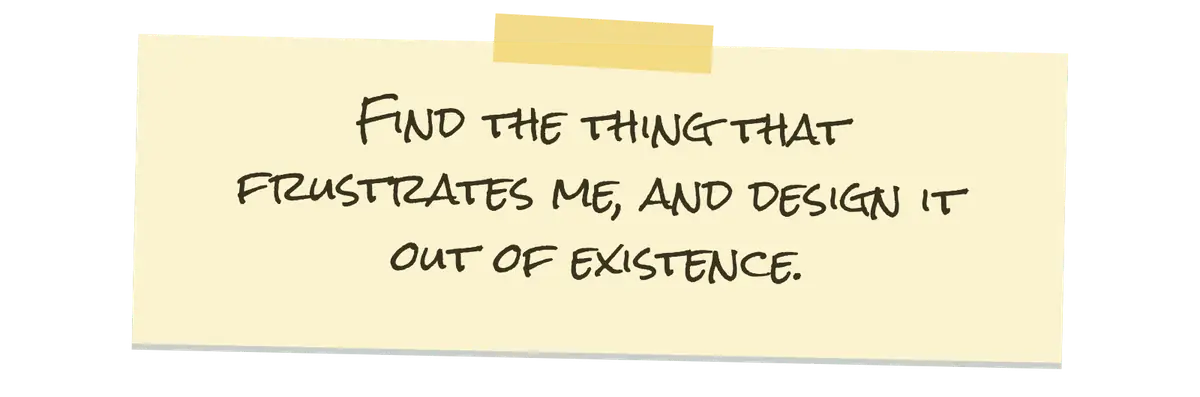
So in every session I run, I work toward the same goal: find the thing about AI that frustrates me, and design it out of existence. Every fix stays put, so each new session starts a little smarter than the last one did. So do I.
Before AI
I didn't always work with AI
Long before I typed my first message into ChatGPT, I spent over a decade in product development, product management, project management, and operations, untangling systems and processes for dozens upon dozens of clients.
The process maps, the systems audits, and what my clients said about working with me are all on one page.

Comparing notes
I love comparing notes with people who care about operations, process design, and how AI fits into both. You can find me on LinkedIn and at joyceakiko.com.
The rest of me
I live in northeastern Pennsylvania. I love big, fat, super fluffy cats with stubborn personalities, especially ones with tuxedo coloring, though I only ever have one at a time. And I eat too much ice cream when I'm bored.
If these tools have ever left you amazed and exhausted in the same afternoon, or you've wanted a little more structure around your own mind, you'll probably find something here worth keeping.
Joyce Akiko