Data is my backbone. About a decade ago I gave a speed talk about it in Philadelphia, at Ignite Philly 14, on my love of data and self development. Ignite talks run on twenty slides, fifteen seconds each, and the slides advance on their own whether I’m ready or not. I called mine The Startup Body, on using data, process, and startup methodology to reach fitness goals.
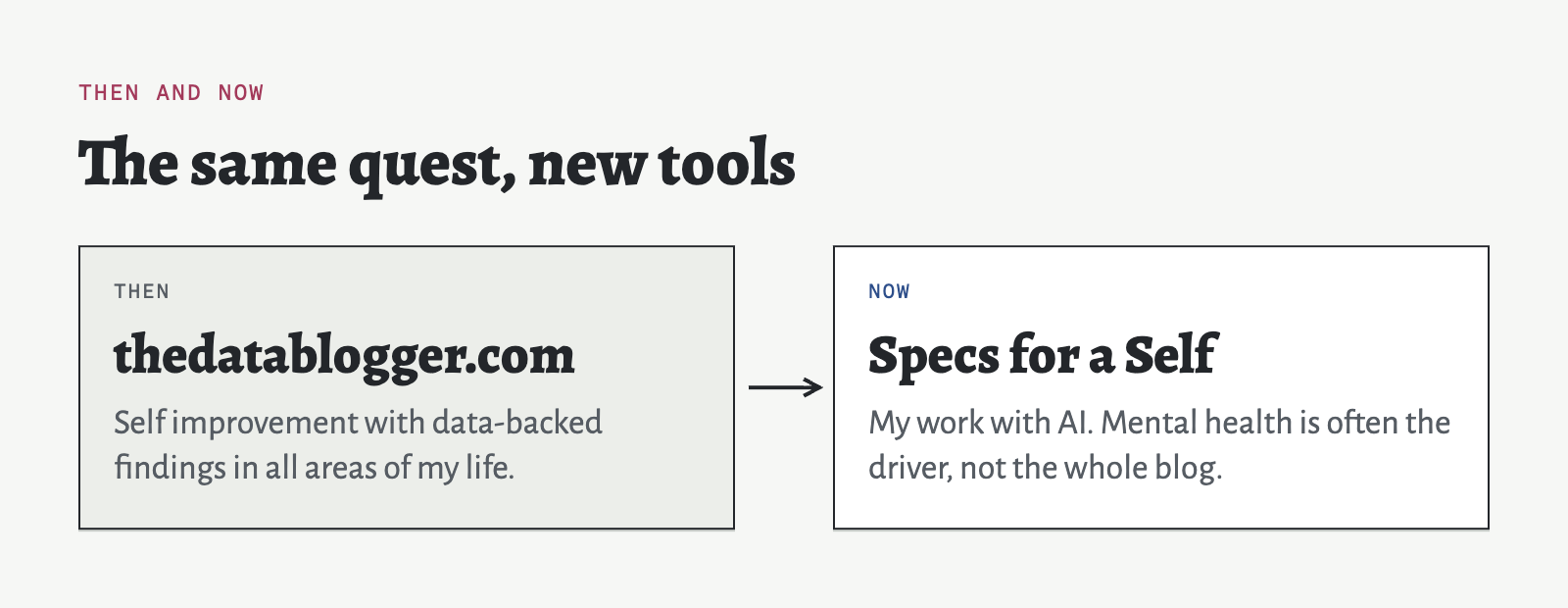
That love started with a blog. I used to own thedatablogger.com. That’s where my unending quest of continuous self improvement with data-backed findings in all areas of my life first began. The quest never stopped. But over 10 years later, the tools changed… a lot.

I’m starting a blog again. This time, it’s about my work with AI. Mental health is a topic here, and often the driver for what I build with AI, but it is not the entire focus of the whole blog. The rest of it is the same thing I was chasing back then: getting better at being me, and having the data to back it up.
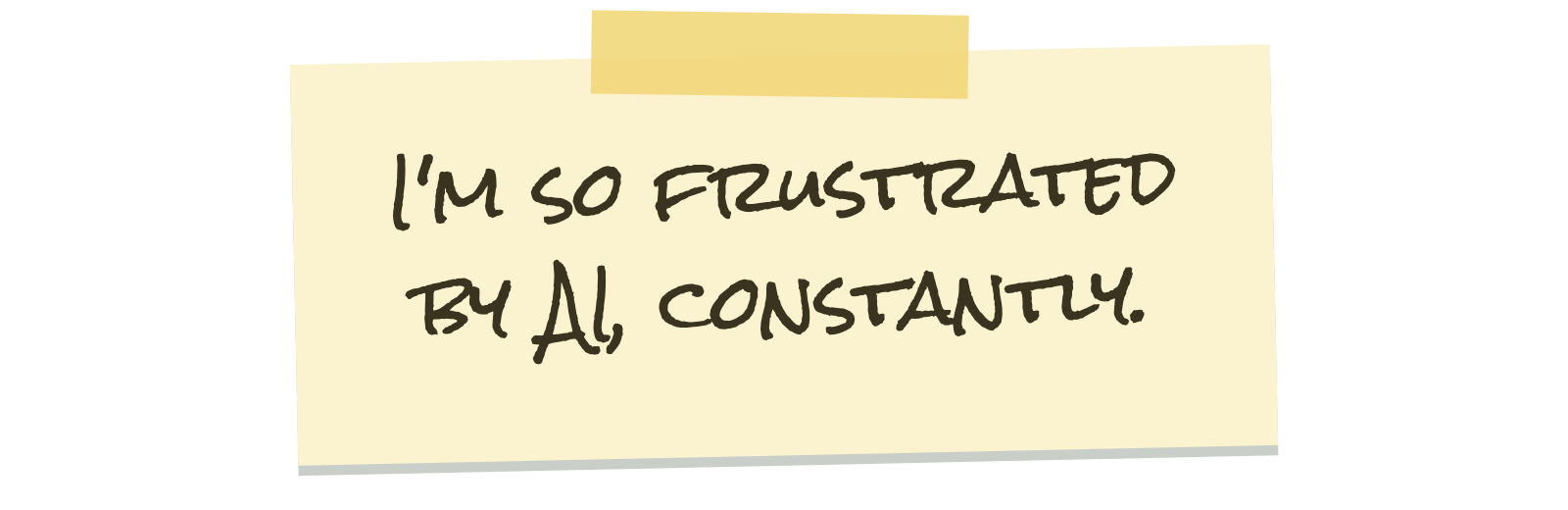
I love AI. I also find it incredibly frustrating.
I love AI, though it has the tendency to drive me up the walls with pure frustration. The way that it makes promises that I know it can’t keep, and sometimes makes decisions that I can’t find any logical reason behind. Or when it just straight-up tells lies, while simultaneously placing great confidence in those answers. Arghh.
But I am not someone who is able to feel frustrated about something that I have the ability to change by building in systems and processes. Those moments of building are my favorite.
My latest project, for example, revolves around creating mechanisms to lock in my standing rules for AI with branching if/then rules in order to guide the model’s output or logic down different paths based on specific conditions or criteria. Then I wrote a lightweight Lua script to auto-inject a command that reinforces these rules before the AI begins any output in response to a message that I send it. Like Hooks for Claude Code, but this works on any LLM – Claude, ChatGPT, Perplexity, Gemini, you name it.
Systems and processes are my zones of expertise, where I light up and thrive and feel alive. So I actively, daily, and in every single session with AI, work towards the elimination of AI frustrations.
Most of what you’ll read here comes out of that habit. When a tool keeps doing the thing that makes me want to throw my laptop across the room, I write the rule, build the check, or design the system that stops it. Then I write it up here so you can take what works.
Yes, I use AI to write these posts. Here’s my AI disclosure statement.
These days, it feels like AI written content is constantly appearing, from the newsletters in your inbox to Reddit posts and comments. And AI writing has its tells, whether or not it also has an Anthropic watermark. The formulaic phrasing that becomes repetitious. The sycophancy. For Claude, it’s this cultured, eloquent politeness mixed with odd jargon, like how it says “two things landed, and one of those is mine to own”.
While I believe the “Dead Internet Theory” is onto something, I do want to make the case for allowing AI to assist people in getting their own words out there. I suffer from a great deal of anxiety around putting myself “out there” with this blog, despite quick-logging content ideas multiple times a day. It’s similar to blank page paralysis, but magnified by my fears of what people will think of me.
After sitting on an Obsidian vault holding 22,624 notes for a few weeks though, I realized that I had plenty of original, human-generated thoughts and content stashed away, with more and more being added to that vault every single day. And while I may not be able to go through 2.2GB of .MD files to hunt out everything I ever wrote in regards to one topic across multiple data sources in the last few years… you know what can? That’s right.
So yes, I did use AI to write this post. I’m not going to pretend otherwise. And if you’re someone who uses AI often, you might know which LLM wrote the sentence “I’m not going to pretend otherwise”. Spoiler alert: Claude drafts every post from my own notes, my journals and the word-for-word messages I type to it, backed up to an Obsidian vault holding thousands of Claude session transcripts. A tool called Spiral reworks the sentences AI wrote so they sound more like me, using Stylometry, which is the statistical and quantitative analysis of a writer’s unique linguistic style.
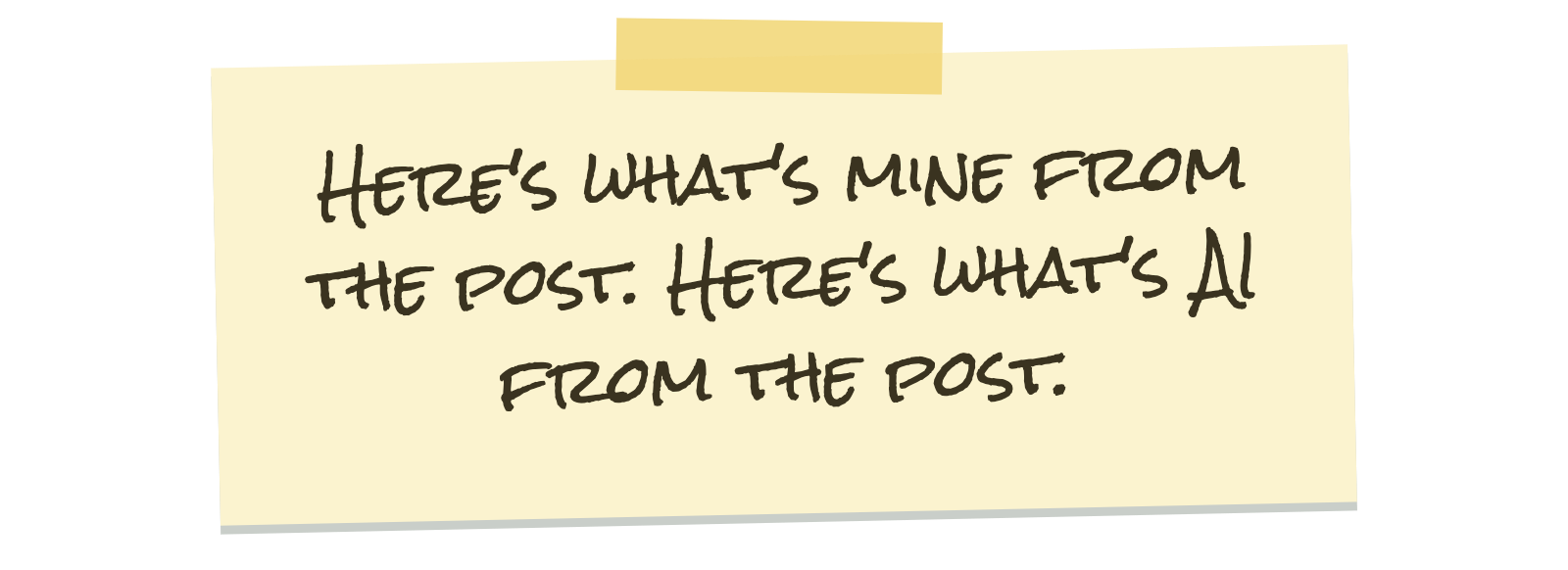
And I’d love it if there were some kind of way to be transparent about it, like: here’s what’s mine from the post. Here’s what’s AI from the post.
So here’s what I’m going to do about it.
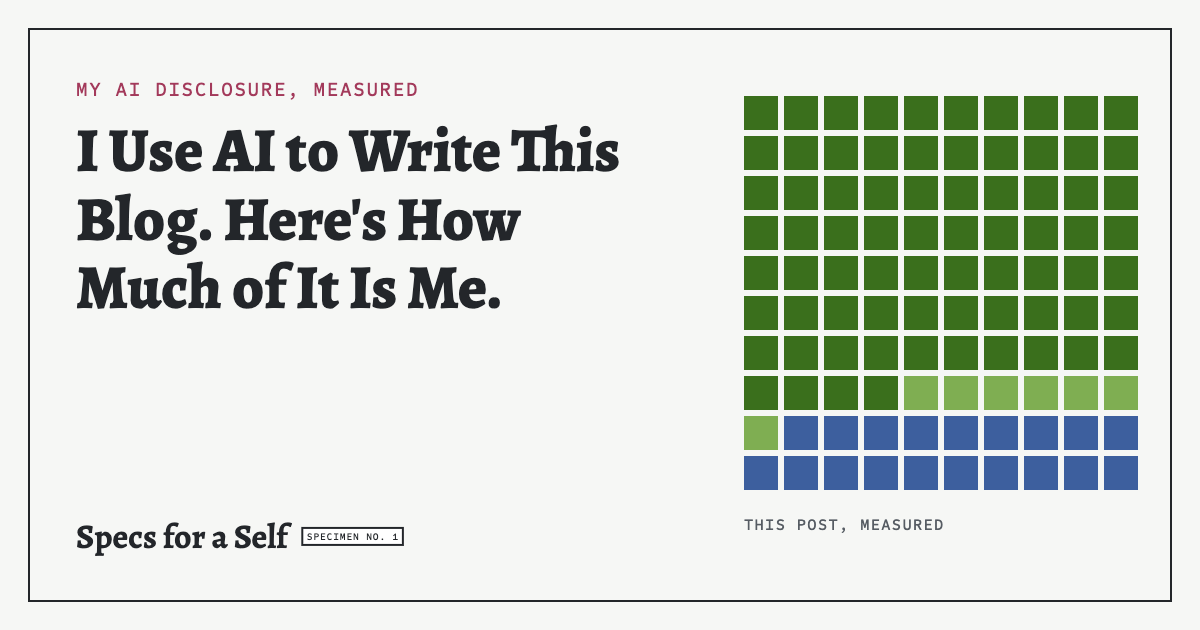
One hundred squares at the end of every post
Starting with this one, every post ends with a block of 100 squares. Each square is 1% of the words in the post. Each one falls into one of three groups: my own words, word for word; my words, reworded by AI to fit the post; and words written by AI, with no source in my words.
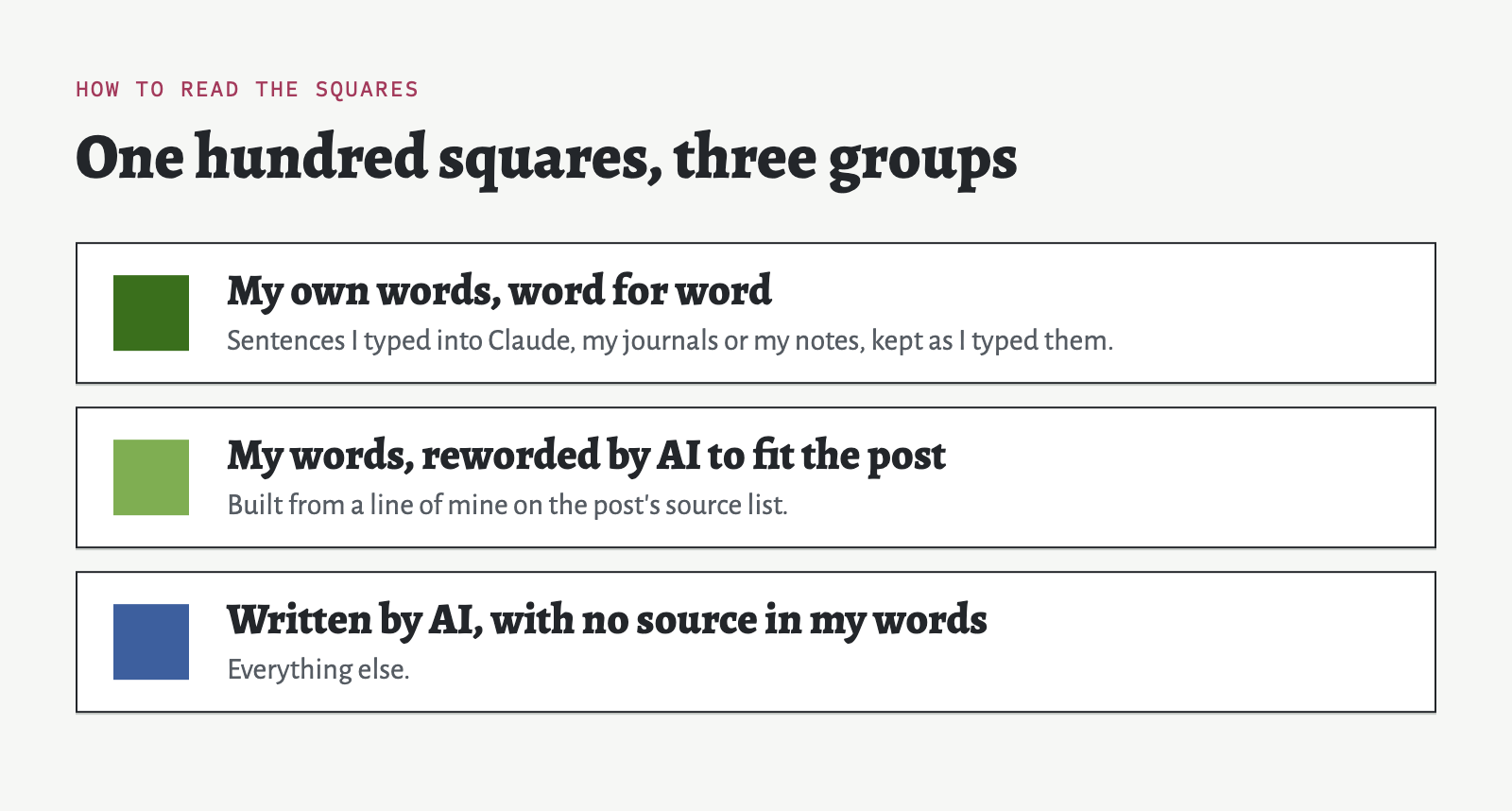
“My own words” means literal word-for-word sentences that I personally typed directly into Claude, or into Rosebud, my journaling app, or any of the other sources that are used when writing a blog post (side note: Claude IS allowed to clean up my abundance of typos and occasional curse words). The edits and rewrites I make to an AI-generated draft, one created from information I provided and under my direction, are my own words as well.
The middle group, “My words re-worded by AI”, is all original source material, written by me and only me, that AI updates so the content fits into the post. A truth-check after each draft is automatically run against my content in the vault to ensure that facts are kept accurate despite re-wording or re-arranging to create a coherent post.
And then we have the “Written by AI” category. This is where AI wrote on its own, with nothing from my own words. This happens when there’s a disconnect between two paragraphs, and a transition is needed, for example.
The counting is done by a script, not a gut feeling. It looks for runs of four or more of my words in the same order, across my messages and journals. Every edit I make to the post before it goes live counts as mine too. If something wasn’t searched, the visual says so.
Coming soon: the whole process, start to finish
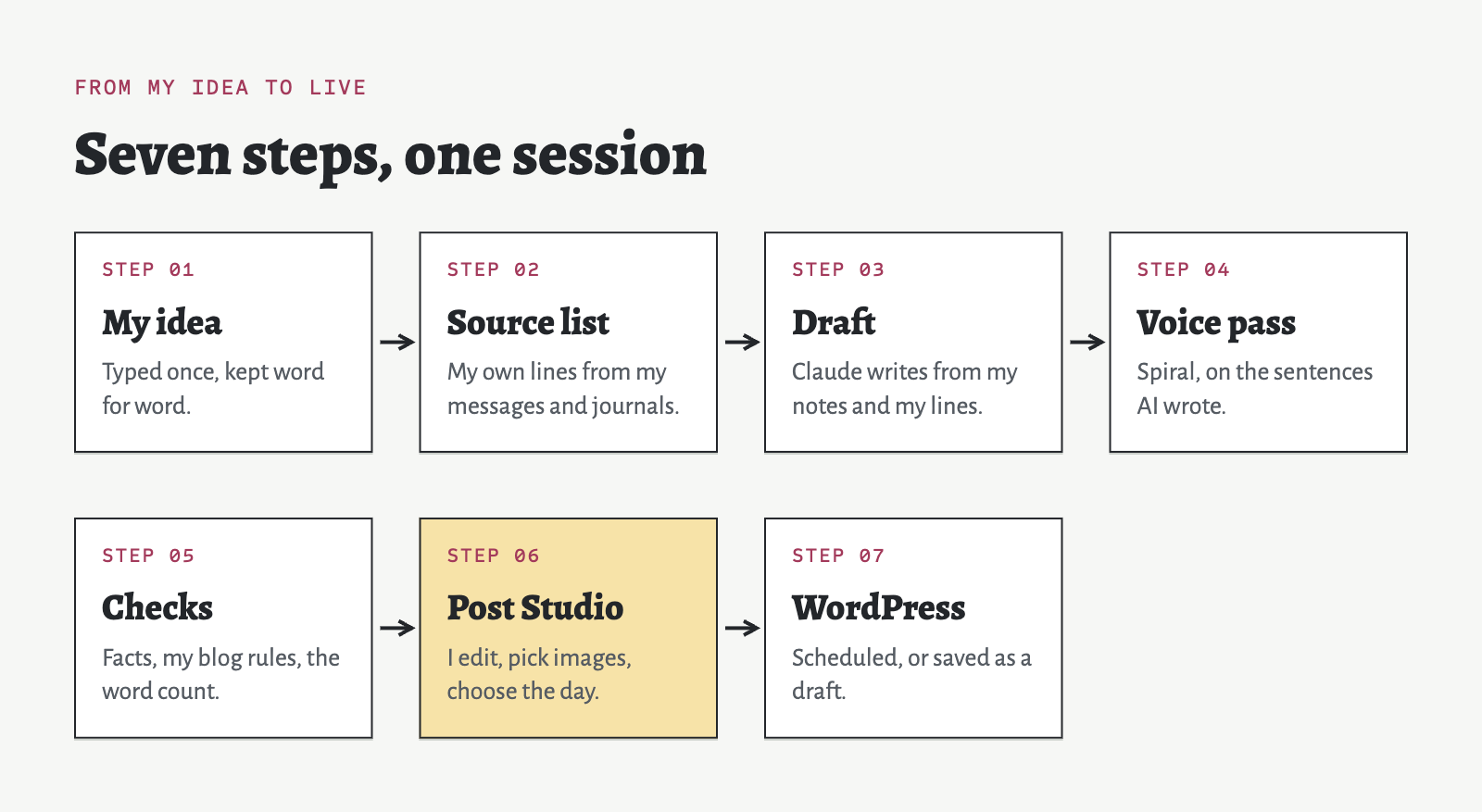
I’m building a page dedicated to the entire process flow of how I go from an idea for a blog post all the way to live on the blog, including all the custom AI plugins and skills and agents that I created for this purpose, and all the connectors and systems and tools that go along with it. It should be up soon.
For this post alone, that process meant Claude doing the drafting and the building, my Obsidian vault holding my notes, transcripts, and journals, Spiral for the voice pass, DataForSEO for the keyword research, BreezePM keeping track of every Claude session along the way, a tool I built called Post Studio where I edit the post, choose the images and pick which day it goes live, and then Claude pushes it all to WordPress at the end.
If you use AI to write and you’ve been wondering how to be honest about it, you can borrow the idea and make it your own. I highly recommend it! Count your own words. Show the squares. Let readers see exactly how much of the post is you.